
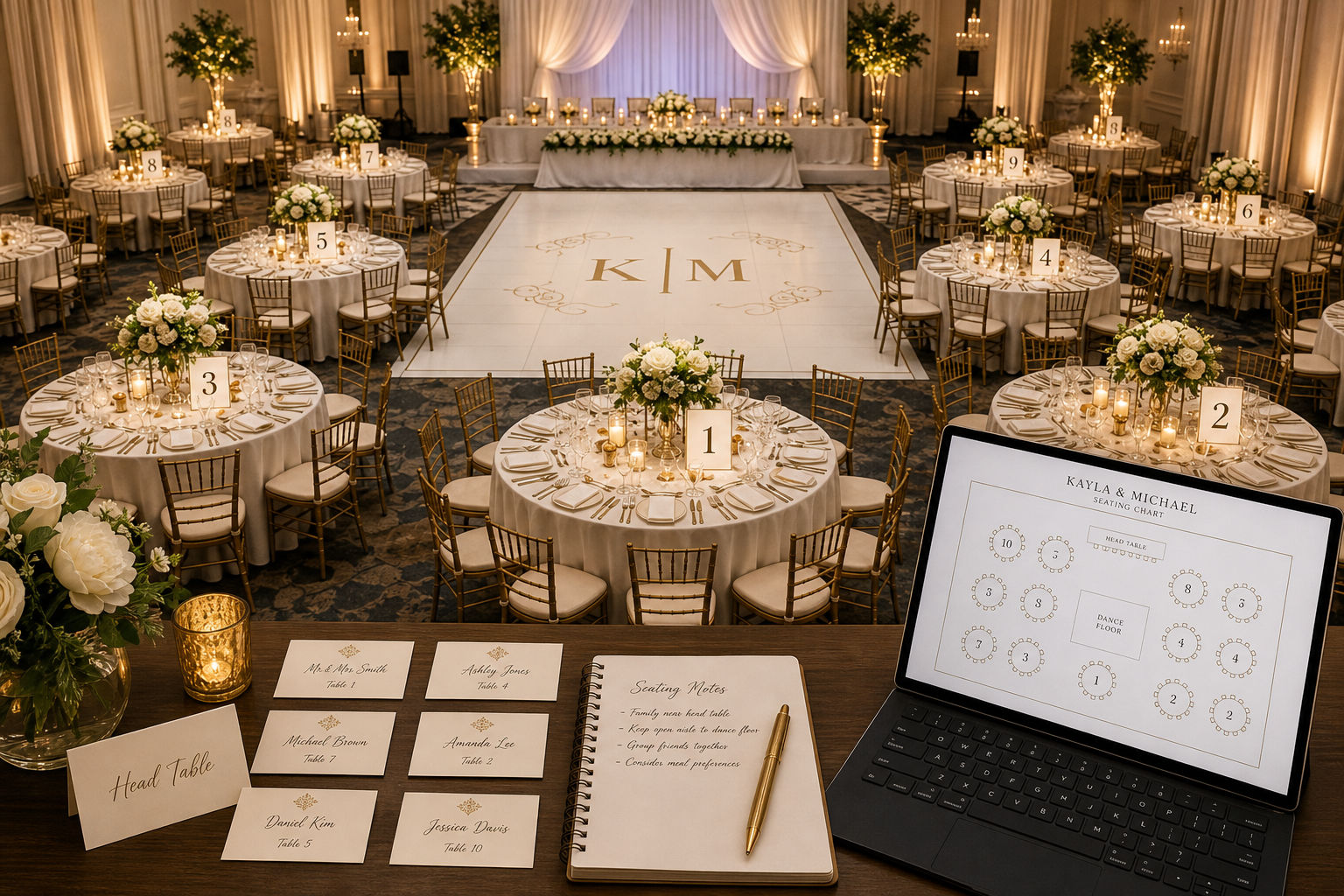
How to Organize a Wedding Seating Chart for 100+ Guests
Organizing a wedding seating chart for a small, intimate gathering is one thing. Doing it for 100 or more guests is a completely different challenge. The moment the guest list crosses the triple-digit mark, the seating plan stops being a simple task and starts feeling like a major logistical project.
Why a Seating Chart Matters for Large Weddings
Some couples consider skipping assigned seating for larger weddings and going with open seating instead. This seems simpler on paper, but it rarely works well in practice for events over 80 or 100 guests.
The Risks of Open Seating
Without a structured seating arrangement for a wedding, several things tend to happen. Early guests claim the best seats, and late guests get stuck wherever space remains. Friend groups scatter or cluster awkwardly, and catering teams cannot track meal preferences effectively without table assignments.
Guest Experience: A well-organized plan gives guests a clear destination when they arrive, reducing confusion at the entrance.
Venue Flow: It allows the couple and their planner to control the room's energy, positioning VIPs with the best sightlines and keeping high-energy groups near the dance floor.
Service Efficiency: Assigned tables allow staff to move through the room quickly and ensure the right meal gets to the right person.
Beyond logistics, assigned seating shows guests that real thought went into their experience. A guest who finds a thoughtfully assigned seat feels welcomed in a way that open seating cannot replicate.
A Step-By-Step Organizing Guide
Step 1: Build a Clean, Finalized Guest List
Before you touch the seating chart, make sure every confirmed RSVP is captured in one master document. For large weddings, a clean list is not optional; it is the tool that prevents duplicate entries and missing names.
Step 2: Group Guests by Relationship
Instead of assigning individual seats immediately, create broad categories to see how many tables each group might need. Groupings often include:
Immediate family from both sides
College friends and work colleagues
Out-of-town guests who may not know many others
Children and their parents
Step 3: Map the Venue Layout
Get the actual floor plan from your venue. Note the table sizes and how many seats each table holds. Round tables of 8 to 10 seats are most common, while rectangular tables can seat more but often restrict cross-table conversation.
Handling Special Seating Situations
Larger weddings frequently involve more complicated family dynamics, such as divorced parents, estranged relatives, or blended families. The general approach is to give these guests enough physical distance to feel comfortable while keeping them in positions that respect their relationship to the couple.
VIP guests like grandparents and the wedding party should be placed near the front of the room. Additionally, consider guests with mobility aids—they should be seated near entrances and away from heavy foot traffic areas to ensure an accessible experience.
Common Mistakes to Avoid
Seating Incompatible Guests Together
Avoid filling a table with people who have nothing in common just to hit a numerical target. Consider whether the group will actually enjoy each other's company throughout the evening.
Waiting Too Long to Start
Many couples put off the seating chart because it feels overwhelming. However, starting late only increases stress. Begin grouping your guests as soon as the first wave of RSVPs arrives rather than waiting for the final count.
Overcomplicating the Layout
Not every table needs a complex theme or a perfectly curated mix of personalities. Simple, comfortable seating is always better than elaborate arrangements that create more work and confusion.
Practical Tips for 100+ Guest Events
Use digital tools: Dedicated seating tools allow for faster drag-and-drop adjustments. For event day, a QR code system like DigiSeats lets guests find their table instantly on their phones.
Build in flexibility: Leave one or two seats intentionally unassigned as buffers for last-minute additions or changes in the final week.
Designate one owner: One person should be the single point of contact for seating updates to avoid conflicting versions of the chart.
The couples who handle large wedding seating charts most successfully share one habit: they start early, stay organized, and build in flexibility for changes.
Real-World Example: The 120-Guest Ballroom
Priya and Daniel were planning a 120-guest wedding at a ballroom venue with 12 round tables of 10. Their venue had a central dance floor, a bar along one side wall, and a sweetheart table at the front.
They started by listing all 120 confirmed guests in a spreadsheet, grouped by relationship. Priya's immediate family came to 14 people, which filled one full table with 4 seats to spare. They added close aunts and uncles to that group to round it out. Daniel's family was larger, around 22 people, so they split into two tables and positioned them side by side near the front.
The wedding party of 10 had their own table adjacent to the sweetheart table. Four college friend groups, each around 8 to 10 people, each got their own table. Two work colleague groups from different jobs were seated separately to avoid any professional awkwardness.
That left about 16 guests who were either solo attendees or couples who did not fit neatly into another group. Priya and Daniel created two mixed tables for these guests but spent time making sure each table had at least one socially comfortable, easy-going guest who would naturally draw people into conversation.
They used a digital seating tool to manage the working version and switched the guest-facing display to DigiSeats for event day. Guests scanned a QR code at the entrance, typed their name, and found their table in seconds. The entrance stayed clear, and Priya and Daniel did not receive a single seating question on the day.
A Well-Planned Wedding Seating Chart Makes the Day Smoother for Everyone
Organizing a wedding seating chart for 100+ guests takes time and attention, but the payoff is real. Guests who feel thoughtfully placed are more comfortable, more social, and more likely to enjoy themselves. The event runs smoother because service staff, coordinators, and entry teams all have a clear structure to work from.
The couples and planners who handle large wedding seating charts most successfully share one habit: they start early, stay organized, and build in flexibility for changes. They treat the seating plan as a living document rather than something to finalize once and forget. And increasingly, they use digital tools on event day to eliminate the entrance bottleneck that a printed board creates.
A large wedding seating chart does not have to be the most stressful part of planning. With the right process, it becomes one of the most satisfying things to check off the list.